
Heart Rate Variability
So how are you feeling today? Tired? Feeling fresh? Maybe a bit stressed? If you are an athlete, how were you feeling after your last training session? Fresh and ready to go, or maybe you need a few days off…? How do you really know?
In most cases when we answer these questions we are probably giving our best guess with our heads, fortunately however modern medicine has moved on a lot in recent years and we can now give a more accurate measure of how stressed our bodies are, and the answer lies not in our heads but in our heart….
More specifically our heart rate, and how variable the heart rate is.
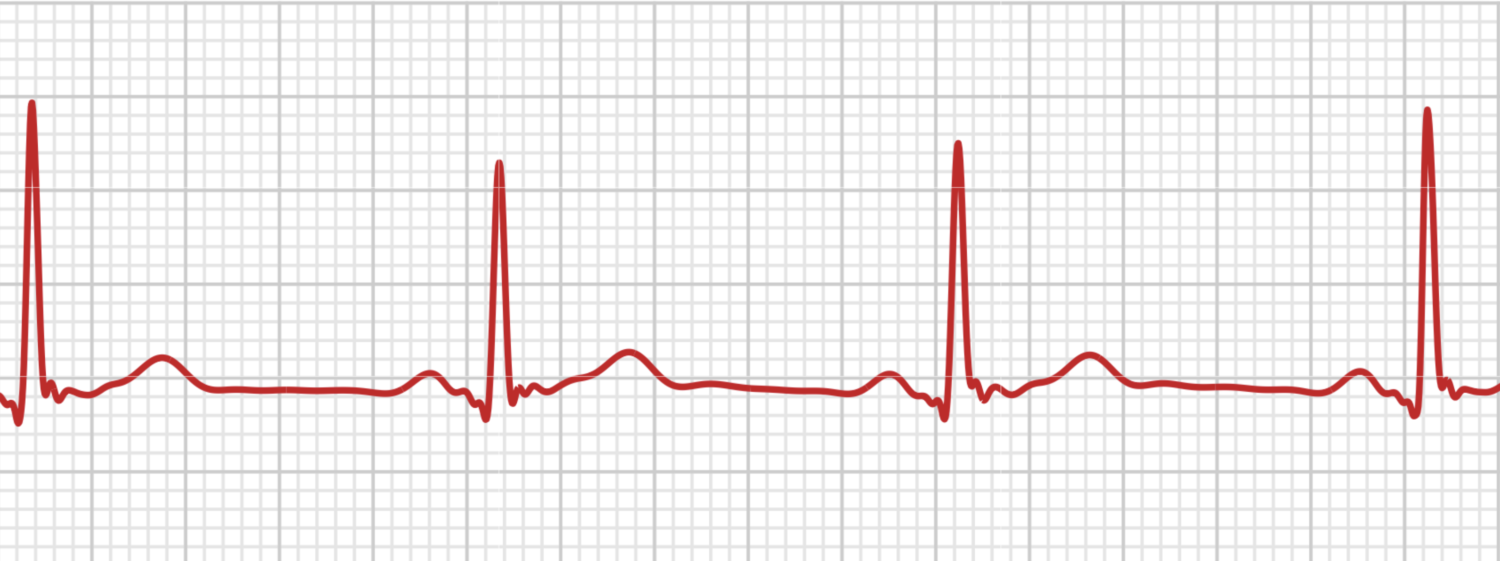
Heart rate variability (HRV) is the measure of the variability between our heart beats. An easy way of understanding this is to consider an electrical reading of our heart rate, also known as an ECG reading, see picture below. You can see from the ECG that the heart rate beats are represented by the peaks of the “R” waves on the reading, the gaps between these beats represents the heart rate beat variability, or HRV. We now know that HRV is an indicator of how stressed we are, more specifically how balanced our autonomic nervous system is.

Image showing an ECG reading, the gaps between the “R” waves (big peaks) also known as “R-R interval” shows variation between our heart rate beats otherwise known as HRV.
Your autonomic nervous system is a very clever system, it’s the one that works in the background without us having any control over it. It is split into two separate parts, the sympathetic and parasympathetic systems. To illustrate how these two systems work, recall that time when you first set eyes on your significant other, the heart rate raised a little and your palms became ever so slightly clammy, you may have even blushed! These are all classic signs of our autonomic nervous system coming into play, more specifically in this case – the sympathetic nervous system (often referred to as fight or flight). Or, for another example consider that nice warm relaxing feeling after a glass of wine (or any other favourite tipple – just the one though!) or that time when you finished the nice relaxing yoga class and your tummy started to gurgle when you relax on the sofa in the evening, there’s your parasympathetic component kicking in (also known as the rest and digest system).
When we are well rested our parasympathetic nervous system becomes dominant and this leads to a higher variability between our heart beats, however when we are stressed, our sympathetic nervous system is more dominant, and as such our HRV is often much lower. Why does this matter? Well, whether our autonomic nervous system is in a sympathetic or parasympathetic state can tell us a lot about how rested or stressed we are. Changes in HRV have been associated with a number of different illnesses such as cardiovascular disease, diabetes, arthritis, Alzheimer’s disease, periodontal disease, and certain types of cancers as well as declines in muscle strength and increased frailty and disability (3). A recent study even demonstrated that lower HRV predicted poor survival rates in patients admitted to hospital with COVID19 (1).
However, it’s important here to consider the term stress, this can either be from a physical stress like a hard training session or emotional stress like a tough day at work or trying to frantically get the kids ready for school. Stress comes in many different ways, and unfortunately modern society is full of it, and it isnt letting up. An interesting study from 2008 showed that high stress at work was associated with lower HRV in Whitehall office workers (2). Though because we have pretty good coping mechanisms we tend to not realise how our body is managing these stressors, and if left without attention this can lead to poor health and well-being, HRV can give us that information before we get ill.
There are no right or wrong numbers for HRV, what we are interested in is the trend in your numbers. We all get stressed from time to time, it’s an essential part of life, what we are interested in is how your HRV changes over time and in response to our environment. A consistently low number, or a significant drop in HRV could lead to problems with our health and well-being. A recent example in the clinic was a marathon runner who came to see me with left sided chest, neck and arm pain. He had been assessed in the accident and emergency department and they had ruled out anything serious with his heart, after this he visited me in clinic. On his assessment I was unable to detect anything significantly wrong with his spine, joints or muscles, though I did notice significant tension around his neck and shoulder muscles. When discussing possible causes for this he mentioned how work was particularly stressful at the moment with a lot of deadlines to meet, on top of this he wasn’t letting up with his running training at all. Interestingly he had a wearable device which tracked HRV (he didn’t know this!), and when we looked at his data his numbers were pretty low and had been for months. We discussed using acupuncture to relax his muscle tension and provide him with some pain relief around the neck and shoulders, (recent studies have also shown how acupuncture itself can improve HRV) (4). I combined this treatment approach with some exercises – specifically some relaxation and breathing exercises that he had to do every day for 20 minutes…alone, and in a quiet environment!
The results were really positive. Within a few weeks his symptoms had resolved and he was feeling much better, like his normal self. The surprise however was in his HRV data, which had been quietly tracking in the background. His HRV gradually climbed over the course of a month as his symptoms improved!
Now it’s difficult to say which of the interventions we used had the greatest effect, but by assessing and monitoring this patient’s stress levels we were able to free him of his symptoms whilst allowing him to get back to doing what he loved – marathon running!
Now you may be thinking what does this mean for me? Well one very important thing to remember is that HRV is something unique to you and it is important to monitor your trends in HRV and not to focus on one single recording taken in isolation. Fortunately many new wearable devices do this and can give you insights into how stressed you are and how ready you are for exercise (some are better at doing this than others). Different manufactures vary with the way they present this information, whether it be “training load” “readiness” or “stress score”. This information may simply give you an indication that you need to take it easy for a few days, put that hard training session off until the weekend or make sure you get enough good quality sleep and time to relax away from our busy lifestyles. By doing this you give the autonomic nervous system chance to rebalance itself, giving you a chance to prevent illness or injury.
So, now you’ve read this, how are you feeling? Fresh and ready to go, or maybe you need a few days off…?
Phil Williams is a Chartered Physiotherapist at Great Northern Physiotherapy, Lincoln. He specialises in musculoskeletal and sports medicine and is passionate about helping people keep active healthy lifestyles.
- Mol MB, Strous MT, van Osch FH, Vogelaar FJ, Barten DG, Farchi M, Foudraine NA, Gidron Y. Heart-rate-variability (HRV), predicts outcomes in COVID-19. PloS one. 2021 Oct 28;16(10):e0258841.
- Chandola T, Britton A, Brunner E, et al. Work stress and coronary heart disease: what are the mechanisms? Eur Heart J 2008;29:640–8.
- Thayer JF, Yamamoto SS, Brosschot JF. The relationship of autonomic imbalance, heart rate variability and cardiovascular disease risk factors. International journal of cardiology. 2010 May 28;141(2):122-31.
- Chung J. Effect of acupuncture on heart rate variability: a systematic review. The Journal of Alternative and Complementary Medicine. 2014 May 1;20(5):A83-4.