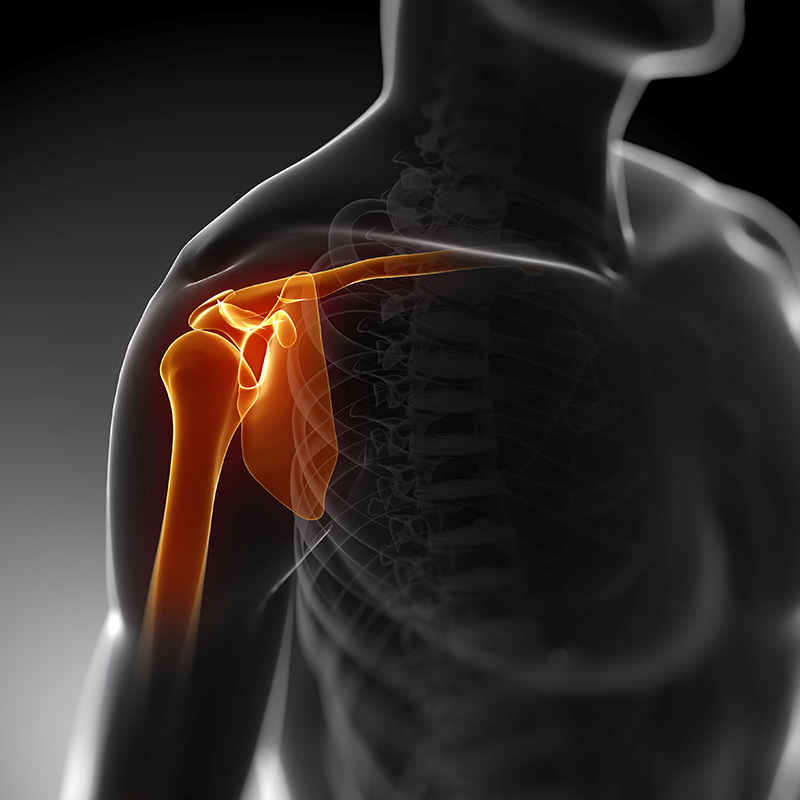

Subacromial pain describes discomfort arising from structures within the space near the top of the shoulder. These can include the rotator cuff tendons, the subacromial bursa and, in some cases, the biceps tendon.

Symptoms
Pain is commonly felt around the upper and outer part of the arm rather than directly over the shoulder joint.
You may experience:
- Pain when raising your arm
- Discomfort when reaching overhead or behind your back
- Pain when drying or combing your hair
- Difficulty dressing
- Pain when lifting or carrying
- Discomfort when lying on the affected side
- Pain travelling further down the arm when symptoms are more irritable
- Weakness or reduced confidence using the shoulder
Symptoms can range from a mild ache to sharper pain during particular movements.
Causes
Subacromial pain is often associated with the rotator cuff, a group of tendons that help connect the upper arm to the shoulder blade and control shoulder movement.
These tendons manage load throughout daily life. They can become painful when they’re exposed to:
- A sudden increase in activity
- Repetitive overhead movement
- Heavy lifting
- Reduced activity or deconditioning
- A fall or direct injury
- Changes in sporting or exercise habits
- Workstation or occupational demands
Other structures, including the subacromial bursa or biceps tendon, may also contribute to symptoms.
The condition was previously described as shoulder impingement, based on the idea that tissues were being trapped by bone. Current understanding suggests that shoulder pain is usually more complex and influenced by several factors rather than a single structural problem. In many cases, the tissues around the shoulder become irritated because they have gradually been overloaded or are not being adequately supported.
Diagnosis
Subacromial pain is normally diagnosed through a clinical assessment.
Your physiotherapist will ask about your symptoms, activity levels, work, sport and any recent injuries. They’ll assess your shoulder movement, strength and control and may use specific clinical tests to understand which structures are sensitive.
An X-ray or ultrasound scan may be considered when:
- Symptoms began after a fall or significant injury
- There is marked weakness or loss of movement
- Your symptoms aren’t progressing as expected
- An injection or shockwave therapy is being considered

Treatment Options
Treatment begins by understanding what has contributed to your shoulder pain and building a plan around your needs and goals.
Personalised exercise rehabilitation
Progressive exercise is one of the most important parts of treatment. Your programme may focus on improving rotator cuff strength, shoulder control and the capacity of the arm to manage work, sport and everyday tasks.
Activity modification
We’ll help you identify movements, postures or training habits that may be aggravating your symptoms. The aim is usually to adjust the amount of load on the shoulder rather than stop all activity.

Manual therapy
Manual therapy may be used alongside exercise to help manage pain, improve comfort and support joint movement.
ULTRASOUND Guided injection
A guided injection may be considered when significant bursal irritation is limiting your ability to begin rehabilitation.
Shockwave therapy
Shockwave therapy may be appropriate in selected cases, particularly where calcification within a rotator cuff tendon is contributing to persistent pain.
LASER THERAPY
Laser therapy can be used to help reduce pain and inflammation and is often combined with exercise therapy as part of a comprehensive rehabilitation programme.
Recovery Timelines
Recovery varies depending on how long you’ve had symptoms, your current strength, the demands placed on your shoulder and whether there has been a recent injury.
Many people begin to notice improvements as their activity is adjusted and their strength programme progresses. However, rebuilding shoulder capacity can take several weeks or months, particularly when symptoms have been present for a long time.
Your programme will be progressed gradually so that improvements are sustainable rather than rushed.
When to Seek Help
Book an assessment when shoulder pain is affecting your sleep, work, exercise or ability to complete everyday tasks.
Seek professional advice promptly when:
- Pain began after a fall or significant injury
- You suddenly can’t lift your arm
- You have severe pain, swelling or visible deformity
- You notice significant weakness
- Symptoms are worsening or aren’t improving
- You develop persistent numbness or tingling
Our team will help you understand what’s contributing to your symptoms and create an effective, tailored plan focused on helping you move with confidence.
Not sure where to start? Let’s chat about your recovery goals.
Clinically Reviewed By

Phil Williams
Director and Consultant Physiotherapist
You DON’t need to suffer with shoulder pain
Shoulder pain should not stop you from staying active, sleeping well, or doing the things you enjoy. At Great Northern Physiotherapy, we’ll help you understand what is causing your pain and create a tailored plan to get you moving with confidence again.
Book your initial assessment and take the first step toward pain-free movement.
SHOULDER PAIN FREQUENTLY ASKED QUESTIONS
The terms are sometimes used interchangeably, but subacromial pain is now often preferred. It reflects the fact that symptoms are more complex than tissues simply being trapped or pinched.
Complete rest is rarely the best long-term solution. Temporarily reducing painful movements may help, but gradual exercise is important for rebuilding strength and confidence.
Not usually. Most cases can be assessed and treated based on your symptoms and clinical examination. Imaging may be helpful after trauma or when progress isn’t as expected.
Often, yes. Exercises may need to be adapted to reduce irritation while maintaining strength and fitness.
Most people begin with advice and progressive rehabilitation. An injection may be considered when pain is severe enough to prevent meaningful exercise or when bursal irritation is suspected.
Related PHYSIO SERVICES
To support your recovery, your physiotherapist may recommend one or more of our related services:


Book your initial assessment and take the first step toward pain-free movement.