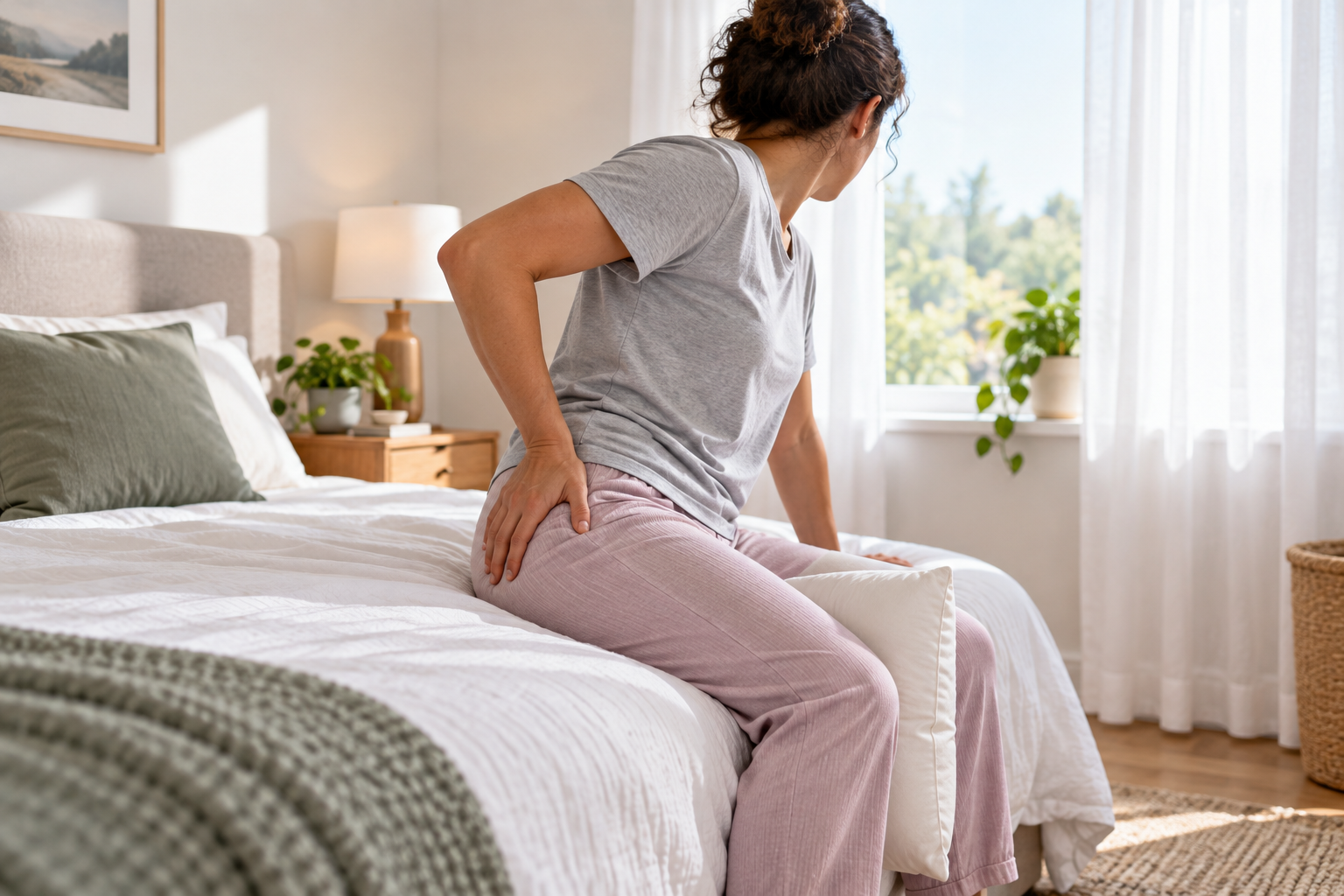

Pain on the outside of your hip can make ordinary activities surprisingly difficult. Walking the dog, climbing stairs, getting out of the car or lying on your side may all become uncomfortable. If this sounds familiar, you may have heard the term Greater Trochanteric Pain Syndrome, or GTPS.
GTPS is a common cause of pain around the outer hip. It can affect adults of different ages and activity levels, and it does not only occur in people who play sport. The good news is that symptoms can often be improved with the right combination of activity changes, gradual strengthening and an individual assessment.
What is Greater Trochanteric Pain Syndrome?
The greater trochanter is the bony prominence that you can feel at the outside of your upper thigh, close to the hip joint. Several important structures sit around this area, including the tendons of the gluteal muscles and small fluid-filled sacs called bursae.
Greater Trochanteric Pain Syndrome is an umbrella term for pain arising from these tissues. It was once commonly described as hip bursitis, but outer hip pain is not always caused by an inflamed bursa. The gluteal tendons may also become sensitive or overloaded, and both the tendons and bursa can contribute to symptoms.
Pain is often felt directly over the outside of the hip. It may spread a short distance down the outer thigh, but it is usually different from pain that travels down the leg due to irritation of a nerve in the lower back.
What symptoms might you notice?
People with GTPS commonly experience:
- Pain or tenderness when pressing on the outside of the hip
- Discomfort when lying on the affected side
- Pain when walking, particularly for longer distances
- Symptoms on stairs, hills or when standing on one leg
- Pain when getting in or out of a car or chair
- Stiffness or aching after sitting for a while
- Discomfort when turning in bed or changing position at night
Symptoms can vary from day to day. A relatively easy day may be followed by more pain if you have walked further than usual, climbed several flights of stairs or spent a long time standing.
It is also possible to have outer hip pain without a clear injury. Symptoms may develop gradually after a change in activity, an increase in walking or running, a new exercise routine, or a period of reduced movement followed by doing more than usual.
Why can walking and stairs be painful?
The muscles and tendons around the hip help to control the pelvis when you stand, walk and move from one leg to the other. They work harder when you climb stairs, walk uphill or balance on one leg.
When these tissues are sensitive, activities that repeatedly load the outside of the hip can become painful. This does not necessarily mean that the hip is being damaged every time you feel discomfort. Pain is a protective response, and its intensity can be influenced by the amount of load, the sensitivity of the tissues and how quickly activity has changed.
That is why stopping all movement is not usually the best long-term solution. Instead, the aim is to find a manageable level of activity and build capacity gradually.
Practical ways to manage your symptoms
1. Reduce aggravating pressure
Direct pressure on the outer hip can increase symptoms. For a short period, try to avoid lying directly on the painful side if this is uncomfortable.
If you prefer to sleep on your side, lying on the less painful side with a pillow between your knees may help keep your hips more comfortable. Some people find that a pillow supporting the upper leg reduces the tendency for the painful hip to drop or rotate forwards.
Avoid sitting with your legs crossed if this increases your symptoms, as this position can place additional pressure around the outside of the hip. Choose a chair that allows your feet to rest comfortably on the floor and avoid staying in one position for too long.
2. Keep moving, but adjust the dose
You do not necessarily need to stop walking altogether. Instead, consider temporarily reducing the distance, speed or frequency of walks. A shorter, flatter route may be more manageable than one long walk with hills.
Use your symptoms to guide the amount you do. Mild discomfort during an activity may be acceptable for some people, but pain that continues to build, changes the way you walk or remains significantly worse afterwards suggests that the activity needs to be reduced.
Break up longer periods of standing and walking where possible. If stairs are painful, take them more slowly and use the handrail for support while symptoms are settling.
3. Avoid sudden increases in activity
A common pattern is to feel slightly better and then quickly return to normal activity. This can lead to a flare-up and make it difficult to judge what your hip can currently tolerate.
Try to increase one factor at a time. For example, you might first increase the length of a walk, then allow your body time to adapt before adding hills or a faster pace. Keeping a simple note of your walking and symptoms can help you recognise patterns.
4. Build strength gradually
The muscles around your hip and pelvis play an important role in walking and stair climbing. A tailored strengthening programme can help improve how your hip manages everyday loads.
Early exercises may involve gentle, controlled contractions that do not significantly increase your symptoms. As your tolerance improves, exercises can progress towards movements such as supported weight-bearing, sit-to-stand exercises, step-ups and other tasks that reflect your daily activities.
The right exercises depend on your symptoms, current strength, mobility and goals. An exercise that is useful for one person may be too demanding for another, particularly during a painful flare-up. Aim for steady progress rather than trying to work through severe pain.
5. Consider your overall activity pattern
GTPS can be affected by more than one activity. Think about recent changes in walking, running, gym sessions, gardening, work demands or time spent standing. Even a change that seems small may increase the total load on the hip.
If your week includes several demanding activities, spacing them out may help. Plan easier days between more strenuous tasks and avoid making large changes to your routine all at once.
When should you seek an assessment?
Consider arranging an assessment if:
- Your pain is affecting sleep or everyday activities
- Symptoms are not improving despite reducing aggravating activity
- You are struggling to walk normally or manage stairs
- Pain has developed after a fall or other injury
- You are unsure whether the pain is coming from your hip, back or another area
- Symptoms keep returning when you try to increase activity
A physiotherapist can take a detailed history and carry out a physical assessment of your hip, back and lower limb. This helps identify the movements and loads that are contributing to your symptoms and supports the development of a suitable rehabilitation plan.
Most people do not need a scan to begin an assessment. Further investigation may be considered when the diagnosis is unclear, symptoms are not following an expected pattern or there are other clinical reasons to investigate.
Seek urgent medical advice if you have severe pain after a significant injury, cannot put weight through your leg, or develop symptoms such as marked swelling, fever, unexplained weight loss or feeling seriously unwell. New or worsening weakness, widespread numbness or changes in bladder or bowel control also require urgent assessment.
How can physiotherapy help?
Physiotherapy for GTPS is focused on helping you understand your symptoms and return to the activities that matter to you. Treatment may include:
- Advice on modifying walking, stairs, work and exercise
- A progressive strengthening programme
- Guidance on sleep positions and reducing direct pressure
- Support with gradually returning to higher levels of activity
- Assessment of contributing factors in the hip, back and lower limb
- Review of your progress and adjustment of your rehabilitation plan
Hands-on treatment or other options may sometimes be considered as part of an overall management plan, but the most useful approach is usually one that helps you regain confidence and capacity over time.
Outer hip pain can be frustrating, particularly when it interferes with sleep or makes simple activities feel difficult. However, the right diagnosis and a gradual, personalised approach can help you move forward. If your symptoms are limiting your day-to-day life, an assessment can provide clearer guidance on what to do next.
Not exactly. GTPS is a broader term for pain around the outside of the hip. It may involve the gluteal tendons, a bursa or both, so the term GTPS is often more accurate than describing every case as bursitis.
Not necessarily. Complete rest is not usually the best long-term solution. Reducing the distance, pace or hills may allow you to stay active while symptoms settle. If walking makes your pain build significantly or changes your movement, reduce the amount and seek individual advice.
Lying directly on the painful side can place pressure on sensitive tissues around the greater trochanter. Sleeping on the other side with a pillow between your knees, or trying another comfortable position, may reduce this pressure.
Recovery varies depending on how long symptoms have been present, how sensitive the area is and the demands placed on the hip. Improvement is often gradual. A personalised assessment can help you identify an appropriate starting point and progress your activity safely.
Not usually. A thorough history and physical assessment are often enough to guide initial management. A scan may be considered if the diagnosis is uncertain, symptoms are not improving or there is another reason to investigate further.
Related Services
Related News / Insights / Articles / Blog
- Load With Purpose: Why Gradual Loading Matters for Performance & Injury Prevention
- When does a bursa become bursitis?
Get in touch
If pain on the outside of your hip is affecting walking, stairs, sleep or your usual activities, Great Northern Physiotherapy can help you understand the problem and plan your next steps.