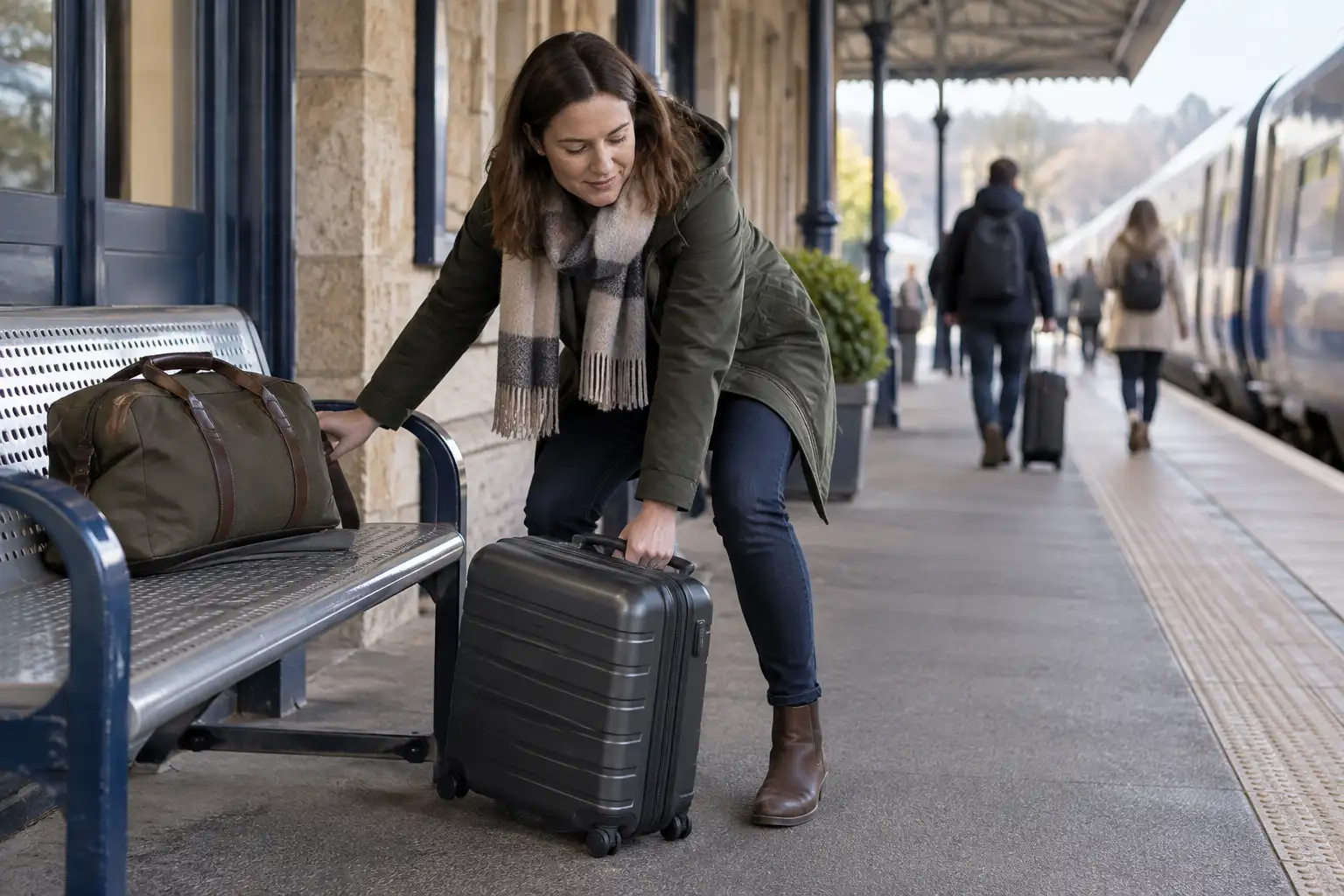

Busy weeks often bring a noticeable change in how much your body has to do. You may be carrying shopping, lifting boxes, sitting in the car for longer, travelling with luggage or spending less time moving between normal activities.
None of these tasks is automatically harmful for your back. The difficulty is often the combination of more load, less recovery and more rushing than usual. When you are tired or distracted, it is also easy to lift awkwardly, stay in one position for too long or abandon the movement habits that usually keep you comfortable.
The good news is that protecting your back does not require perfect posture or avoiding every physical task. Small, repeatable adjustments can make busy periods more manageable.
1. Plan before you lift
Backs often become uncomfortable during rushed or awkward lifts rather than ordinary, well-planned movement. Before picking something up, take a moment to consider what you are about to do.
Ask yourself:
- How heavy or bulky is the object?
- Where does it need to go?
- Is the route clear?
- Can you split the load into smaller amounts?
- Could someone help with the lift?
- Do you need a trolley, suitcase wheels or another way to move it?
This is particularly useful when lifting shopping, storage boxes, decorations, laundry baskets or luggage. If an object is too large to hold close to your body, difficult to grip or blocks your view, it may be safer to change the task rather than trying to manage it in one movement.
When you are ready to lift, stand close to the object. Bring it towards you before straightening up, rather than reaching forwards and then lifting at arm’s length. Use a comfortable stance, move smoothly and avoid holding your breath or bracing as hard as possible.
There is no single “perfect” lifting posture that suits every person or situation. The aim is to make the movement controlled, predictable and appropriate for the size of the load.
Avoid lifting and twisting at the same time where possible
Turning while carrying a load can make a task feel more demanding, especially if you are already tired. Instead, lift the object, keep it close and turn by moving your feet. If you need to place it somewhere behind or to the side, reposition yourself first.
This does not mean that your spine must never rotate. Everyday movement includes bending, turning and reaching. The practical advice is to avoid combining a heavy, awkward lift with a rushed twist when you have another option.
2. Break up long periods of sitting
Busy weeks can involve more sitting than you realise: driving to visit family, working through a backlog, travelling by train or sitting at the kitchen table to organise plans.
Sitting itself is not necessarily damaging to your back. However, staying in one position for a long time can make your back feel stiff or sensitive, particularly when combined with stress, tiredness or an existing problem.
Rather than trying to hold a rigid posture, aim for variety. You can:
- Change position regularly.
- Stand up to make a drink or take a short walk.
- Move your shoulders, hips and ankles while seated.
- Adjust your seat so your feet are supported and you are not reaching forwards.
- Use a small cushion or rolled towel if it makes sitting more comfortable.
- Take breaks during longer car journeys where practical.
If you are working at a desk, avoid treating the chair as a test of endurance. A comfortable position that you can change is usually more useful than trying to maintain one fixed posture throughout the day.
When travelling, prepare for the transition from sitting to standing. Move your feet underneath you, lean forwards comfortably and stand up in a controlled way. If your back feels stiff, a few easy steps before lifting luggage or walking quickly may help you settle into movement.
3. Treat travel as a series of smaller tasks
Travel often combines several challenges: carrying bags, standing in queues, sitting for long periods, climbing steps and moving through unfamiliar spaces. Trying to manage everything at once can leave you rushing and overloading one side of your body.
Make the journey easier by breaking it into stages. For example:
- Pack so that the heaviest items are not awkwardly positioned.
- Use luggage with wheels where appropriate.
- Keep bags light enough to carry comfortably.
- Use both shoulder straps on a backpack.
- Change sides if you are carrying a manageable bag by hand.
- Ask for help with heavy or bulky luggage.
- Allow extra time so you do not need to hurry.
A backpack can be useful when it is adjusted so the load sits close to your body. If it is overloaded, hanging low or carried on one shoulder, it may increase discomfort through your back, neck or shoulders.
When placing luggage in an overhead compartment or onto a high shelf, do not force the movement if the object is too heavy. Ask for assistance. A brief request for help is often a sensible way to reduce an unnecessary strain.
During long journeys, use opportunities to move. Walk around safely when possible, stretch gently or change your seated position. You do not need a complicated routine; regular variation is the important part.
4. Keep movement in your day, even when time is limited
When a week becomes busy, exercise is often the first thing to disappear. It can be tempting to think that movement only counts if you have time for a full workout, but short periods of activity still have value.
Try attaching movement to things you already do:
- Take a short walk after a meal.
- Use the stairs when it feels appropriate.
- Park slightly further away if this is practical.
- Do a few comfortable sit-to-stands while waiting for the kettle.
- Walk while making a phone call.
- Spend a few minutes moving after a long journey.
- Continue a familiar exercise routine at a reduced duration.
The best choice depends on your symptoms, fitness and usual activity. If your back is already sore, select movements that feel manageable rather than attempting to compensate for several inactive days with one demanding session.
You may notice some muscle effort or mild, short-lived discomfort when you move more. That does not automatically mean harm. However, if an activity causes a clear increase in symptoms that lasts or makes normal tasks significantly harder, reduce the amount and consider seeking individual advice.
Consistency matters more than intensity during a busy period. Five minutes of comfortable movement repeated through the day may be more realistic and useful than waiting for an uninterrupted hour that never arrives.
5. Respond early to warning signs
Back discomfort is easier to manage when you notice changes early. Pay attention if you are beginning to:
- Avoid normal movements because they feel difficult.
- Change how you walk or stand.
- Lift only on one side because the other feels uncomfortable.
- Wake regularly because of symptoms.
- Rely increasingly on rest and stop doing everyday activities.
- Experience pain that is becoming more intense or spreading.
Early action does not necessarily mean stopping everything. It may involve reducing the size of a task, changing how often you do it, taking a short movement break or asking someone else to help.
If back pain is persistent, repeatedly returning or affecting work, sleep, travel or daily activities, a physiotherapy assessment may help clarify what is contributing to it and what options are appropriate. Assessment can also be useful if you are unsure how to return to lifting, exercise or other activities after a flare-up.
Seek urgent medical advice if back symptoms are severe, rapidly worsening or accompanied by new significant neurological changes. If you are worried about your symptoms, it is appropriate to seek professional guidance rather than trying to manage them alone.
A simple busy-week back plan
Before the week begins, identify the situations most likely to challenge your back. This might be a long drive, moving supplies, carrying shopping or spending several days at a desk.
Then choose one practical adjustment for each situation:
- Lifting: split the load and bring it close before moving.
- Sitting: change position and take regular movement breaks.
- Travelling: use wheels, backpacks or help to reduce carrying demands.
- Daily movement: keep short, comfortable activity in your routine.
- Symptoms: respond early instead of waiting until they significantly restrict you.
Protecting your back is not about moving cautiously every second or avoiding normal life. It is about matching the task to your current capacity, giving yourself time to move and making sensible changes when the week becomes more demanding.
There is no single lifting posture that is perfect for every task. Use a comfortable stance, keep the object close, move smoothly and avoid rushing. Bending your knees can help when it allows you to get closer to the load, but forcing a deep squat is not necessary for every lift.
Long periods in one position may contribute to stiffness or discomfort, but sitting is not automatically harmful. Changing position, standing regularly and taking short walks can help reduce the effect of prolonged sitting.
Not necessarily. Comfortable, manageable movement is often more useful than complete rest, but the right activity and amount depend on your symptoms. Reduce or modify an activity if it clearly worsens your symptoms or affects normal tasks.
Consider arranging an assessment if symptoms persist, repeatedly return or interfere with sleep, work, travel or everyday activities. Seek urgent medical advice if symptoms are severe, rapidly worsening or accompanied by new significant neurological changes.
Book an appointment
If back pain is affecting your daily activities or you would like guidance on returning to lifting, travelling or exercise, book an appointment with Great Northern Physiotherapy.
Book an appointment or call 01522 787164. You can also email hello@greatnorthernphysiotherapy.co.uk.
Related Services
Related Articles
-

How Physiotherapy Can Help With Sciatica
Sciatica can cause pain, tingling or altered sensation down the leg. Learn how physiotherapy may help, what to do day to day and when assessment is important.