
The simplest and easiest way to prevent injury and improve performance in sport is monitoring your training load.
In the past trying to understand an athletes training load was incredibly difficult and very often it usually entailed simply asking athletes what training they had done in the preceeding weeks or months and asking them how they “felt”. However, this didn’t really give us much indication of how an athlete was really feeling and how much “load” their training was having on their bodies. What we really needed was an objective measures of this.
Move forward 15 years and it’s amazing to see what progress we have made with the advent of Strava, Garmin, Training peaks and many other online training platforms, athletes are now able to track every beat of their training whether it be in a pool, on a running track, or on a turbo trainer….even a stand up paddle board with some fancy watches! In addition to this data, we can also delve into an athletes sleep, resting heart rate, hydration, calories burned, and heart rate variability
By looking at the data taken from wearable devices and training platforms we are now able to get a more thorough understanding of the effect an athletes training load has on them. However, we often find that this data is not used by all athletes.
One of the first things we often do with an injured athlete in clinic is ask what training platform they use and check if we can we have a look at their data. So often we are able to to pinpoint periods in the past 6 or 12 weeks where the start of an injury may have occurred without them knowing. This is often due to sudden spike in loading or changes in training intensity. There may also be subtle changes in sleep or calorie intake in the preceding weeks prior to an injury, and this is often enough to tip an athlete from supreme health, to a full blown injury crisis. Take for example the image below which shows an athletes 4 week training load graph, you can see a sudden spike and increase in training load just before they came to us:

As you can see there is a significant increase here in the athletes “load”. The “Load” can be defined as anything that increases stress on the body, examples include; an increase in total miles ran, or, an increase in the number of intensive miles run over a given period.
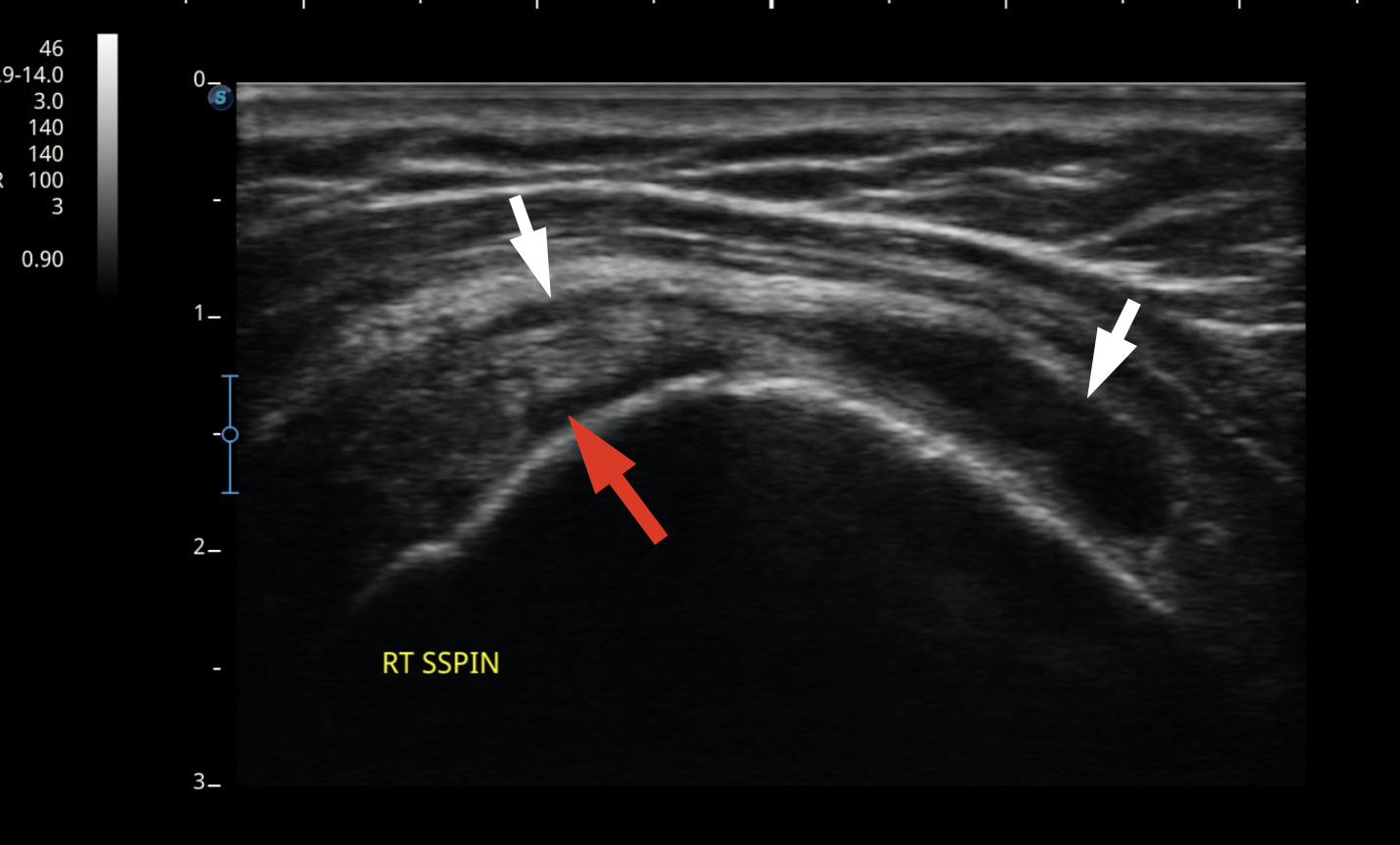
Unfortunately for this athlete when we scanned their painful shin we found a significant stress fracture in the tibia (see white arrow in image below). This led to a period of enforced rest and rehabilitation before the athlete could resume full training.

So what should you track and why? Here are our top 5 fitness tracking tips.
- Resting heart rate. Its a well known fact that resting heart rate will rise if you are unwell, stressed or becoming less fit. Tracking this can be a good basic indictor of how stressed the system is – always go for the same point each day (first thing in the morning is ideal). Most modern trackers do this automatically.
- Training load or HRV. If you need an update on HRV click here. Most fitness platforms now offer some form of “training load” numerical value. Garmin uses “training load”, Training peaks uses “TSS”, whichever one you use make sure you pay attention to it on a weekly basis and try and plan your sessions and rest days so that your training load waves up and down in a periodised manner – it shouldn’t go up and up and up…and up! Periodised hard and easy blocks are crucial for improving fitness and reducing injury risk. For example, try adding a rest week of lower load after a period of 3 progressively harder weeks of training.
- Calories expended. We find this a really simple and useful tool for measuring how hard a session or week of training was. Most watches use heart rate or “METs” as indicators for calories burned, and they are pretty accurate. The more calories you have burned…the harder the workout! It also gives a very simple summary of what calories need to be consumed as healthy nutritious food in order to avoid RED-S.
- Total volume in hours. Don’t track miles, track time. Total hours per week is a real handy tool for planning ahead with training, we try to avoid using miles as a guide because one very slow fatigued painful mile is very different to one fresh easy quicker mile!
- Sleep. We all need sleep, in fact it is so crucial that without it we would die, so tracking it makes complete sense. Accuracy and validity of measurements are still debated but many trackers are improving all the time and in our opinion tracking something consistently is better than tracking nothing at all. If you can, take particular note of awake time, sleep quality, deep sleep and REM….more on that in another blog!
So there you have it, as you embark on your next fitness journey make sure you arm yourself with as much training data as possible. If you are unsure on what this means or you need more help don’t hesitate to contact us.
Enjoyed this and want to read more? Make sure you subscribe! 👇
Our sports medicine services are led by Phil Williams.
Phil is a Chartered Physiotherapist, running coach and sports medicine specialist at Great Northern Physiotherapy, Lincoln.